Long Story, Short

Goody Traders

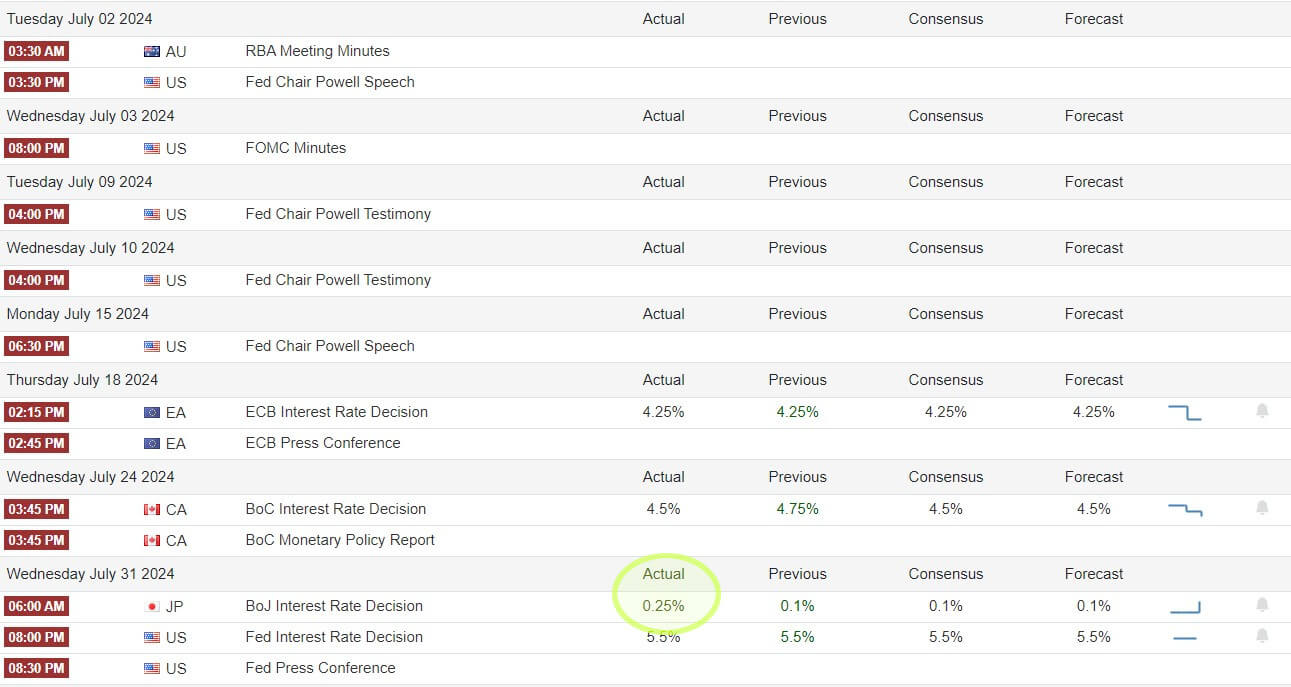
German 18.07.2024, Geldpolitische Entscheidung der EZB (Leitzinssatz: 4,25 % +/- 0,0)
24.07.2024, Geldpolitische Entscheidung der BoC (Leitzinssatz: 4,50 % – 0,25)
31.07.2024, Geldpolitische Entscheidung der BoJ (Leitzinssatz: 0,25 % + 0,15)
31.07.2024, Geldpolitische Entscheidung der FED (Leitzinssatz: 5,50 % +/- 0,0)
01.08.2024, Geldpolitische Entscheidung der BoE (Leitzinssatz: 5,00 % – 0,25)
06.08.2024, Geldpolitische Entscheidung der RBoA (Leitzinssatz: 4,35 % +/- 0,0)
22.08. bis 24.08. Jackson Hole Economic Symposium


1. Geldpolitische Entscheidung der EZB am 18. Juli 2024
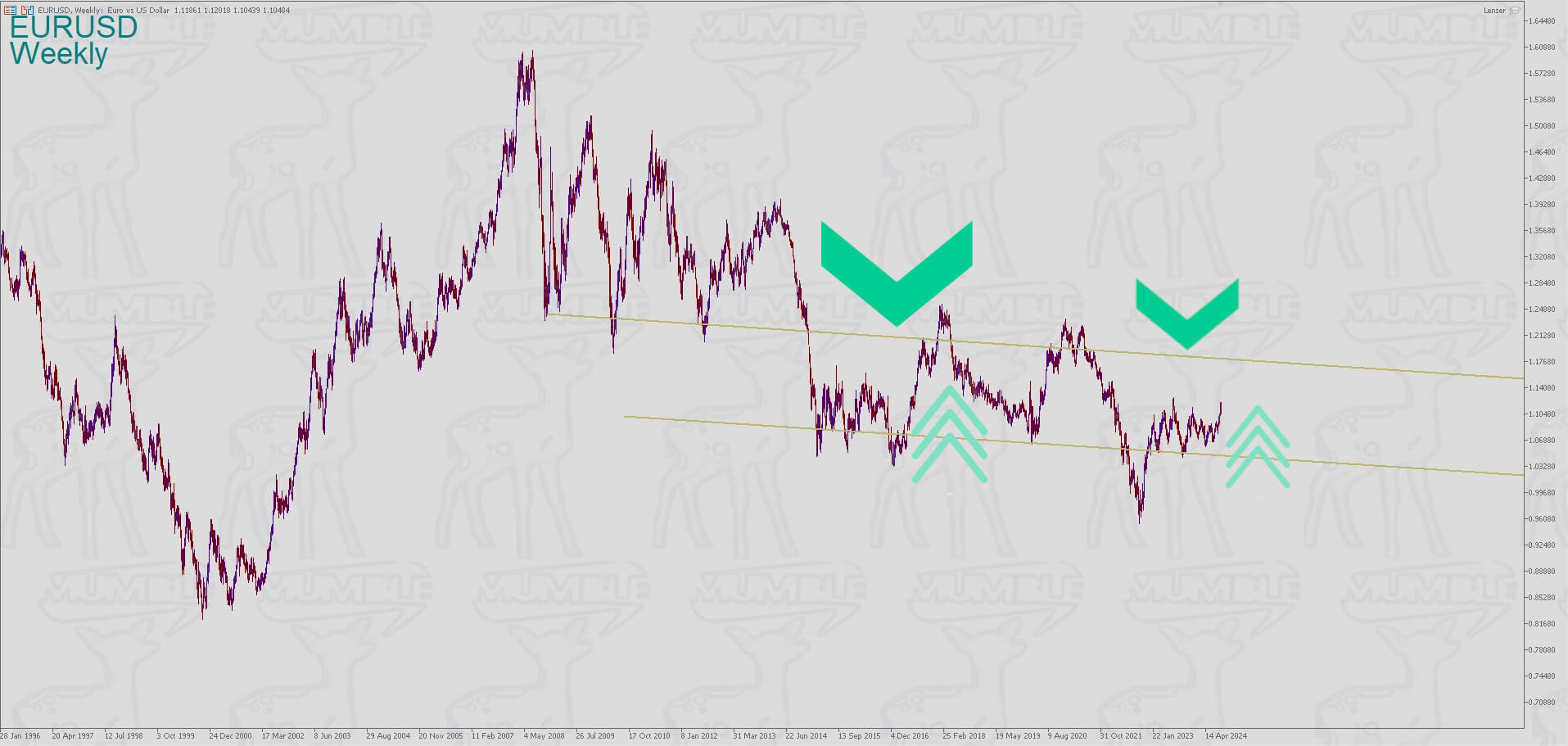
Am 18. Juli 2024 entschied sich die Europäische Zentralbank (EZB), ihre Zinssätze unverändert zu lassen, was ihren vorsichtigen Ansatz angesichts der Herausforderungen durch das verlangsamte Wirtschaftswachstum in der Eurozone widerspiegelt. Trotz des anhaltenden Inflationsdrucks wurde die Entscheidung der EZB als ein Gleichgewicht zwischen Inflationskontrolle und Unterstützung der Wirtschaft angesehen. Dieser Schritt verhalf dem Euro zu Stärke, insbesondere gegenüber dem US-Dollar, da die Märkte erwarten, dass die FED in den kommenden Monaten zu vermehrten Zinssenkungen neigen könnte.

2. Zinssenkung der Bank of Canada am 24. Juli 2024
Am 24. Juli 2024 senkte die Bank of Canada (BoC) ihren Leitzins um 25 Basispunkte auf 4,50 %. Diese Entscheidung war durch Bedenken hinsichtlich der Abschwächung der kanadischen Wirtschaft und der negativen Auswirkungen eines starken kanadischen Dollars auf die Exporte motiviert. Die Zinssenkung wurde zwar allgemein erwartet, führte jedoch zu einer kurzen Schwächung des kanadischen Dollars. Die Währung konnte jedoch schnell wieder etwas Boden gutmachen, da der Markt seine Erwartungen hinsichtlich der zukünftigen geldpolitischen Ausrichtung der BoC neu kalibrierte. Das Paar USD/CAD erlebte eine erhöhte Volatilität, da die Händler auf die Zinssenkung und ihre breiteren wirtschaftlichen Auswirkungen reagierten.

3. Zinserhöhung der Bank of Japan am 31. Juli 2024
Die Bank of Japan (BoJ) erhöhte ihren Leitzins am 31. Juli 2024 von 0,10 % auf 0,25 %. Dieser Schritt markierte eine Fortsetzung der allmählichen Abkehr der BoJ von ihrer bisherigen ultralockeren Geldpolitik, die bereits damit begonnen hatte, sich von der negativen Zinsepoche zu verabschieden. Die Entscheidung war auf die steigende inländische Inflation und die Notwendigkeit zurückzuführen, den Yen zu stabilisieren, der deutlich schwächer geworden war. Diese Zinserhöhung wurde weitgehend erwartet, da die jüngsten Wirtschaftsdaten auf eine höhere Inflation hindeuteten. Nach der Ankündigung legte der japanische Yen gegenüber dem US-Dollar deutlich zu, was zu einem starken Rückgang im Exchange USD/JPY führte. Die Entscheidung führte auch zu einer Neubewertung der Carry Trades, was die Marktvolatilität erhöhte.

4. Zinssatzkonstanz der Federal Reserve am 31. Juli 2024
Am 31. Juli 2024 beschloss die Federal Reserve, ihren Leitzinssatz nach einer Reihe von Zinserhöhungen zur Bekämpfung der Inflation, die sich inzwischen bei etwa 2,9 % stabilisiert hat, bei 5,50 % zu belassen. Die Entscheidung, die Zinsen stabil zu halten, wurde allgemein erwartet und spiegelt die vorsichtige Haltung der Fed wider, die jedoch bei Bedarf für künftige Anpassungen offen bleibt. Der US-Dollar schwächte sich nach der Ankündigung weiter ab, da die Spekulationen über mögliche Zinssenkungen in der Zukunft zunahmen. Diese gemäßigte Prognose trug zu einem allgemeinen Rückgang des USD bei, insbesondere gegenüber dem Yen und dem Euro.

5. Zinssenkung der Bank of England am 1. August 2024
Die Bank of England (BoE) senkte ihren Leitzins am 1. August 2024 von 5,25 % auf 5,00 % und begründete dies mit Bedenken hinsichtlich eines verlangsamten Wirtschaftswachstums und eines schwächelnden Arbeitsmarktes. Obwohl die Inflation über dem Zielwert blieb, wurde die Zinssenkung als notwendig erachtet, um die britische Wirtschaft angesichts zunehmender globaler Unsicherheiten zu unterstützen. Das britische Pfund fiel nach der Ankündigung zunächst stark gegenüber dem US-Dollar und dem Euro, konnte jedoch später einige Verluste wieder aufholen, da die Märkte darüber diskutierten, ob diese Senkung ein einmaliges Ereignis sein oder den Beginn eines längeren Lockerungszyklus signalisieren würde. Das GBP/USD-Paar erlebte erhebliche Schwankungen, da die Auswirkungen der Entscheidung der BoE vom Markt verschiedenlich absorbiert wurden.

6. Zinsfestlegung der Reserve Bank of Australia am 6. August 2024
Am 6. August 2024 beschloss die Reserve Bank of Australia (RBA), ihren Leitzins bei 4,35 % zu belassen. Die Entscheidung der RBA spiegelte trotz anhaltender Inflationssorgen einen vorsichtigen Ansatz angesichts gemischter Konjunktursignale wider, insbesondere schwacher Verbraucherausgaben und eines fragilen Immobilienmarkts. Der australische Dollar erlebte nach der Ankündigung nur begrenzte Bewegungen, erholte sich jedoch später aufgrund steigender Rohstoffpreise und einer verbesserten Marktstimmung. Der Exchange AUD/USD blieb relativ stabil, mit kurzen Phasen der Volatilität, während Händler die geldpolitischen Entscheidungen der RBA beurteilten.

Währungspaar Neuster Trend (ab dem 18. July 2024)
USD/JPY Signifikante Abwärtsbewegung, hohe Volatilität
EUR/USD Euro mit Zugewinnen, schwächelder USD
GBP/USD Die Erwartungen wurden übertroffen; allerdings wird von einem rigiden Wachstum ausgegangen
USD/CAD Bullen und Bären gleichauf; warten auf nachlassenden Inflationdruck
AUD/USD An den Inflationserwartungen ausgerichtete Kursbewegungen


World Economic Forum @Jackson Hole, Wyoming
Der Vorsitzende der US-Notenbank, Jerome Powell, erklärte in seiner mit Spannung erwarteten Rede, dass BoTg-b4die Zeit für eine Anpassung der Geldpolitik gekommen ist, was auf ein wachsendes Vertrauen in die Entwicklung der Inflation schließen lässt. Dieser gemäßigte Kurswechsel des Fed-Vorsitzenden wurde von anderen großen Zentralbanken wie der Bank of England und der Europäischen Zentralbank wiederholt.
Während der genaue Zeitpunkt und das Tempo künftiger Zinsanpassungen von den kommenden Wirtschaftsdaten abhängen, besteht unter den politischen Entscheidungsträgern Einigkeit darüber, dass eine schrittweise Lockerung der Geldpolitik jetzt angebracht ist. Dieser Kurswechsel dürfte das Wirtschaftswachstum ankurbeln und den Druck auf Unternehmen und Verbraucher etwas verringern.

Weitere Details und einen Ausblick auf den FX Exchange wie immer für Premium-Mitglieder.


LG Ben&Deniz

Shabbat Shalom
English 07/18/2024, Monetary Policy Decision of the ECB (Key Interest Rate: 4.25% +/- 0.0)
07/24/2024, Monetary Policy Decision of the BoC (Key Interest Rate: 4.50% – 0.25)
07/31/2024, Monetary Policy Decision of the BoJ (Key Interest Rate: 0.25% + 0.15)
07/31/2024, Monetary Policy Decision of the FED (Key Interest Rate: 5.50% +/- 0.0)
08/01/2024, Monetary Policy Decision of the BoE (Key Interest Rate: 5.00% – 0.25)
08/06/2024, Monetary Policy Decision of the RBoA (Key Interest Rate: 4.35% +/- 0.0)
08/22nd to 08/24th Jackson Hole Economic Symposium


1. ECB Monetary Policy Decision on 18 July 2024
On 18 July 2024, the European Central Bank (ECB) opted to keep its interest rates unchanged, reflecting its cautious approach amid the challenges posed by slowing economic growth in the Eurozone. Despite persistent inflationary pressures, the ECB’s decision was seen as a balance between controlling inflation and supporting the economy. This move helped the Euro gain strength, particularly against the US Dollar, as markets anticipated that the FED might lean towards a more dovish stance in the coming months.

2. Bank of Canada Rate Cut on 24 July 2024
On 24 July 2024, the Bank of Canada (BoC) reduced its key interest rate by 25 basis points to 4.50%. This decision was motivated by concerns about the Canadian economy’s slowdown and the negative impact of a strong Canadian Dollar on exports. The rate cut, while widely anticipated, resulted in a brief weakening of the Canadian Dollar. However, the currency quickly regained some ground as the market recalibrated its expectations for the BoC’s future monetary policy direction. The USD/CAD pair experienced heightened volatility as traders responded to the rate cut and its broader economic implications.

3. Bank of Japan’s Rate Hike on 31 July 2024
The Bank of Japan (BoJ) increased its benchmark interest rate from 0.10% to 0.25% on 31 July 2024. This move marked a continuation of the BoJ’s gradual shift away from its previous ultra-loose monetary policy, which had already begun with earlier rate hikes moving out of negative territory. The decision was driven by rising domestic inflation and the need to stabilize the Yen, which had been weakening significantly. This rate hike was largely anticipated, given the recent economic data pointing to higher inflation. Following the announcement, the Japanese Yen strengthened considerably against the US Dollar, causing the USD/JPY pair to decline sharply. The decision also led to a reevaluation of carry trades, increasing market volatility.

4. Federal Reserve’s Rate Hold on 31 July 2024
On 31 July 2024, the Federal Reserve decided to maintain its key interest rate at 5.50%, following a series of rate hikes aimed at combating inflation, which has now stabilized around 2.9%. The decision to hold rates steady was widely expected, reflecting the Fed’s cautious stance while remaining open to future adjustments if necessary. The US Dollar continued to weaken after the announcement, as speculation grew over potential rate cuts in the future. This dovish outlook contributed to a broad decline in the USD, particularly against the Yen and the Euro.

5. Bank of England’s Rate Cut on 1 August 2024
The Bank of England (BoE) cut its benchmark interest rate from 5.25% to 5.00% on 1 August 2024, citing concerns about slowing economic growth and a softening labor market. Despite inflation remaining above target, the rate cut was deemed necessary to support the UK economy amid rising global uncertainties. The British Pound initially fell sharply against the US Dollar and the Euro following the announcement but later recovered some losses as markets debated whether this cut would be a one-off event or signal the beginning of a more prolonged easing cycle. The GBP/USD pair experienced significant fluctuations as the implications of the BoE’s decision were absorbed by the market.

6. Reserve Bank of Australia’s Rate Hold on 6 August 2024
On 6 August 2024, the Reserve Bank of Australia (RBA) decided to keep its cash rate at 4.35%. The RBA’s decision reflected a cautious approach amid mixed economic signals, particularly weak consumer spending and a fragile housing market, despite ongoing inflation concerns. The Australian Dollar saw limited immediate movement following the announcement, but it later strengthened due to rising commodity prices and improved market sentiment. The AUD/USD pair remained relatively stable, with brief periods of volatility as traders assessed the RBA’s policy outlook.

Currency Pair Latest Trends (Post-18 July 2024)
USD/JPY Significant decline, high volatility
EUR/USD Strengthened Euro, weak USD
GBP/USD Exceeded expectations; underlying surveys suggest slower economic momentum
USD/CAD Remains restrictive until inflation risks diminish; MPC monitoring closely
AUD/USD Prepared to adjust policy based on upcoming economic data and forecasts


World Economic Forum @Jackson Hole, Wyoming
Federal Reserve Chair Jerome Powell, in his highly anticipated speech, declared that BoTg-b4the time has come for policy to adjust, indicating a growing confidence in the trajectory of inflation. This dovish pivot from the Fed chair was echoed by other major central banks, such as the Bank of England and the European Central Bank.
While the exact timing and pace of future rate adjustments will depend on incoming economic data, the consensus among policymakers is that a gradual easing of monetary policy is now appropriate. This shift is expected to provide a boost to economic growth and alleviate some of the pressures on businesses and consumers.

More details and my outlook on the FX Exchange as always for Premium Members.

Sincerely Yours, Ben&Deniz

Economic Calendar July
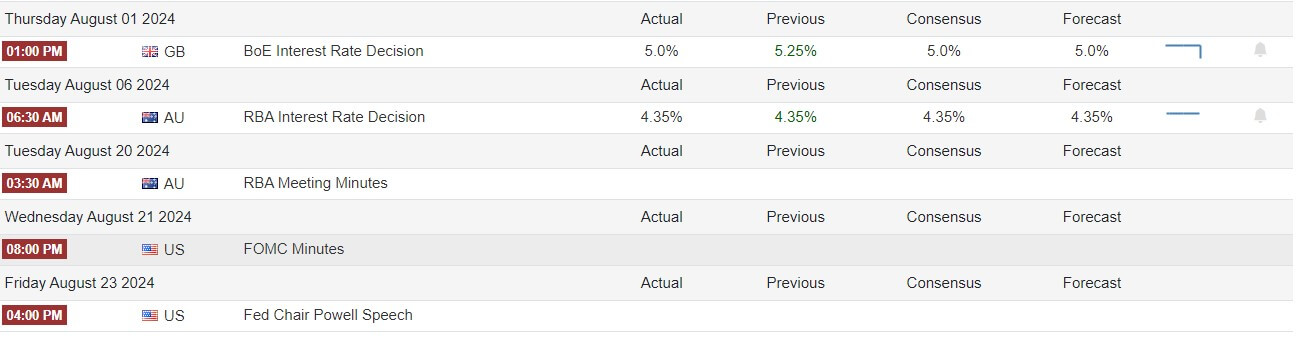
Economic Calendar August
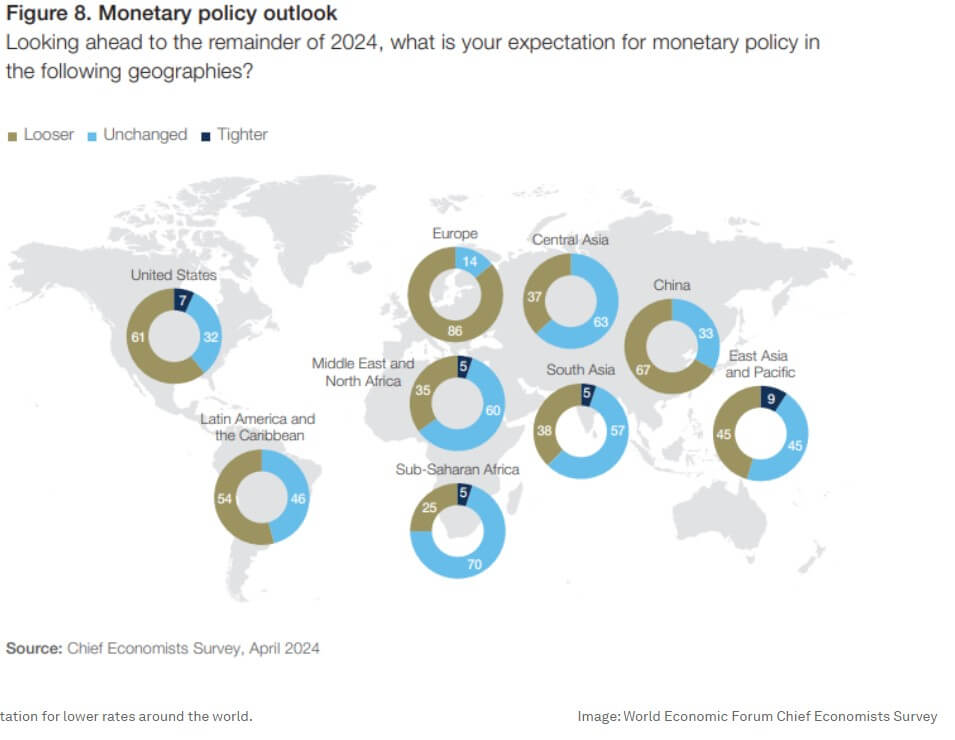
WEF Rates Outlook
World Economic Forum Rates Outlook
EURUSD Weekly Chart
EURUSD Weekly Chart
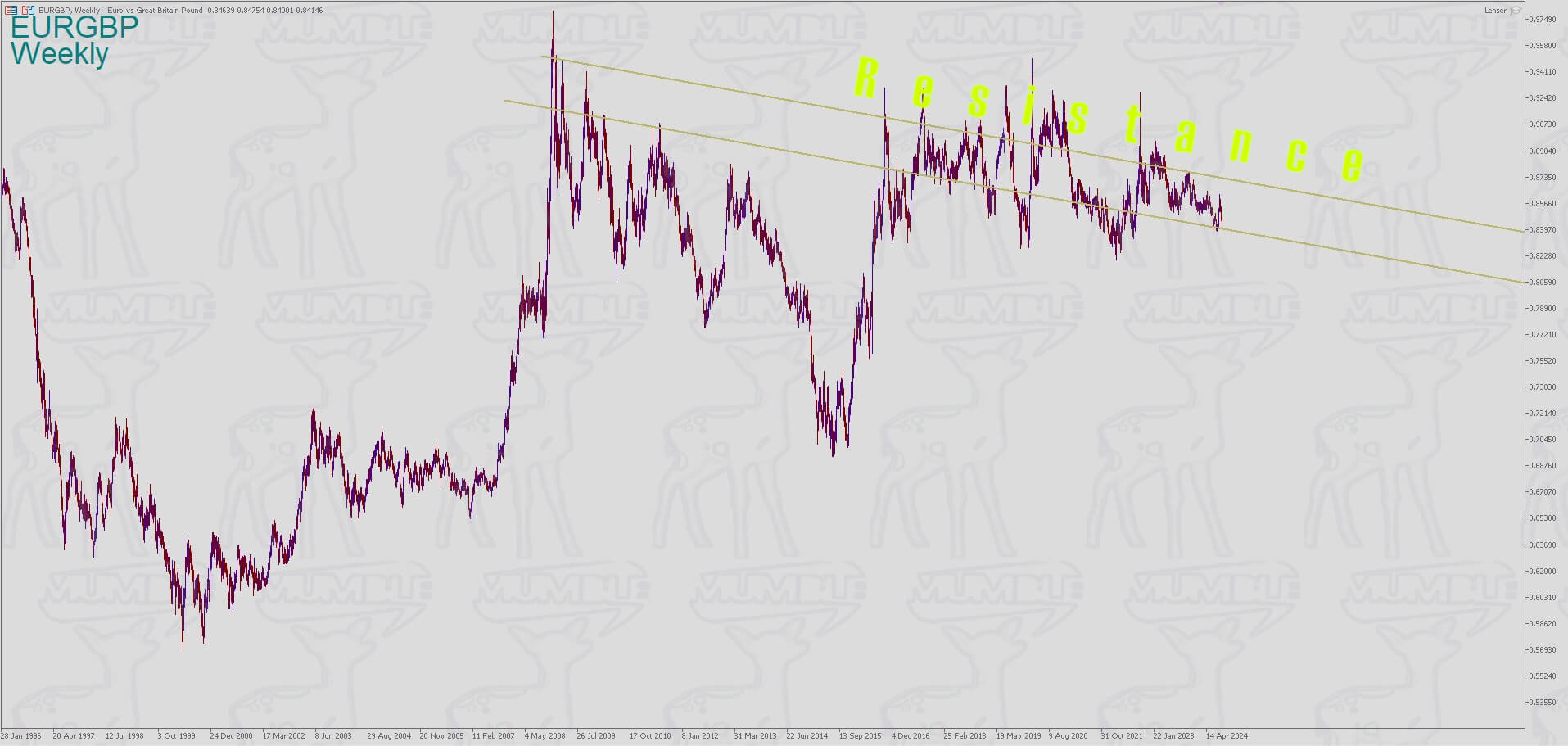
EURGBP Weekly Chart
EURGBP Weekly Chart
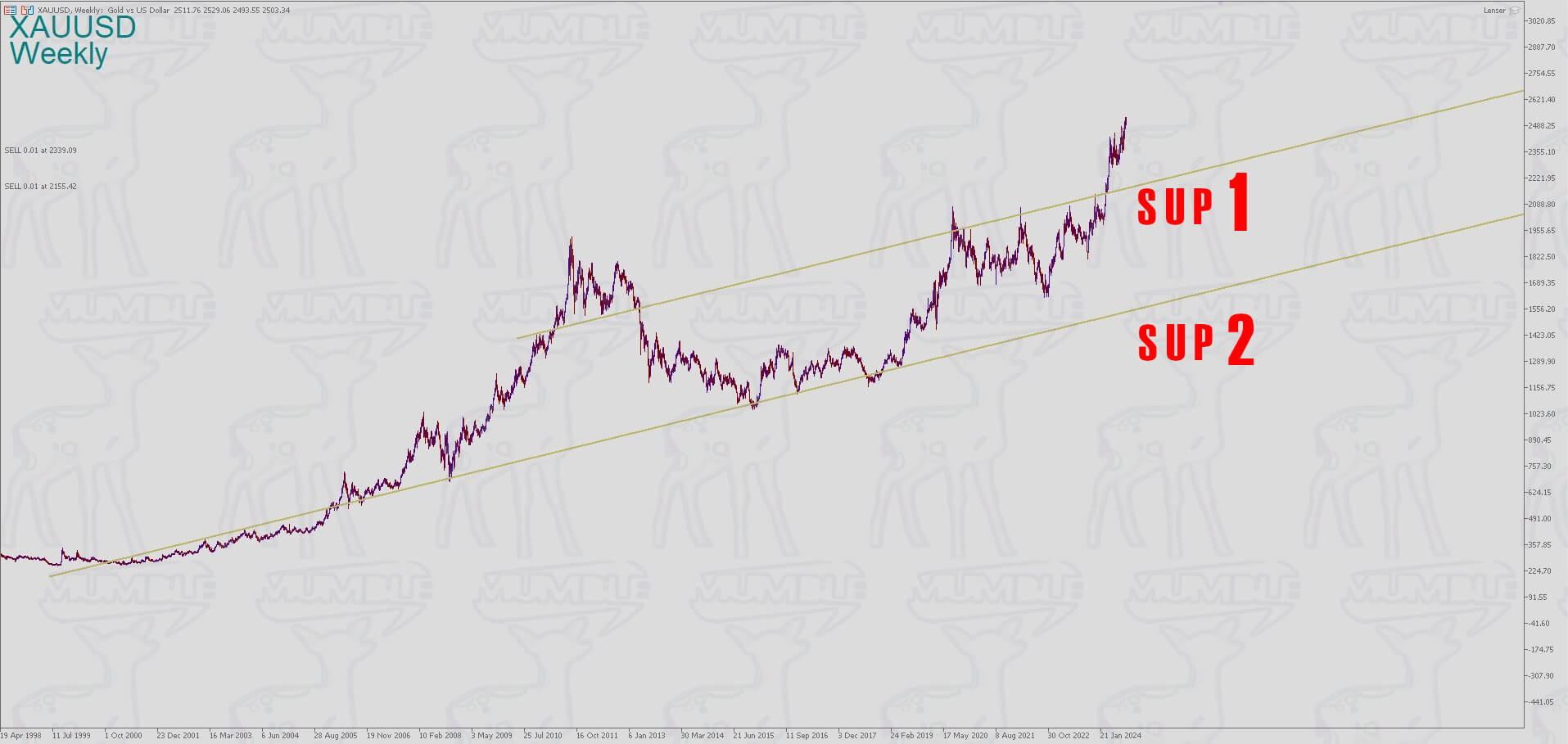
Gold Weekly Chart
Gold Weekly Chart
ECB Governing Council Press Conference – 18 July 2024
BoC Monetary Policy Report in brief – 24 July 2024
Bank of Canada Press Conference – 24 July 2024
FOMC Press Conference July 31, 2024
Bank of England Press Conference, August 01 2024
Reserve Bank of Australia Monetary Policy Decision – 06 August 2024
Fed Rate Cuts Confirmed at Jackson Hole
Broadcasted by: ClearValue Tax

Externe Quellen/Links
URL-Link Beschreibung
ecb.europa.eu – Combined decisions and statement July 18, 2024 (PDF)
bankofcanada.ca – Press Conference Opening Statement July 24, 2024
bankofcanada.ca – Monetary Policy Report July 24, 2024 (PDF)
NHK WORLD JAPAN NEWS – Bank of Japan hikes rates for 2nd time this year July 31, 2024
boj.or.jp – Decisions at the July 2024 Monetary Policy Meeting (PDF)
boj.or.jp – Outlook for Economic Activity and Prices July 2024 (PDF)
federalreserve.gov – Federal Reserve issues FOMC statement July 31, 2024 (PDF)
federalreserve.gov – Transcript of Chair Powell’s Press Conference July 31, 2024 (PDF)
bankofengland.co.uk – Monetary Policy Summary, August 01 2024 (PDF)
bankofengland.co.uk – Monetary Policy Report, August 2024 (PDF)
rba.gov.au – Monetary Policy Decision 06 August, 2024
rba.gov.au – Statement on Monetary Policy 06 August, 2024 (PDF)
weforum.org – „The time has come for policy to adjust.“

Ueda, building blocks for the concrete base

Ueda, building blocks for the concrete base

2024-03-27 19:52:01 UTC+1

Guten Abend

German 19.03.2024, Geldpolitischer Beschluss der Bank of Japan (Leitzinssatz: 0.0% +0.1%).
19.03.2024, Geldpolitischer Beschluss der Reserve Bank of Australia (Leitzinssatz: 4.35% +/- 0.0).
20.03.2024, Geldpolitischer Beschluss der Federal Reserve Bank (Leitzinssatz: 5.5% +/- 0.0).
21.03.2024, Geldpolitischer Beschluss der Schweizer Nationalbank (Leitzinssatz: 1.5% -0.25).
21.03.2024, Geldpolitischer Beschluss der Bank of England (Leitzinssatz: 5.25% +/- 0.0).


Die Bank of Japan geht davon aus, dass das 2%-Preisstabilitätsziel bis Ende Januar 2024 nachhaltig erreicht wird. Die quantitative und qualitative geldpolitische Lockerung der Bank mit der Renditekurvenkontrolle und der Negativzinspolitik haben sich als wirksam erwiesen. Der kurzfristige Zinssatz bleibt das wichtigste Instrument der Geldpolitik, da er darauf abzielt, das 2 %-Ziel stabil zu erreichen.
Zu den Marktoperationsentscheidungen gehört es, den unbesicherten Tagesgeldsatz bis zum 21. März 2024 bei etwa 0 bis 0,1 Prozent zu halten und weiterhin japanische Staatsanleihen zu kaufen. Die Bank plant, den Kauf von ETFs, J-REITs, CP und Unternehmensanleihen schrittweise innerhalb eines Jahres einzustellen und Kredite zu 0,1 % anzubieten, gebunden an Kreditsalden der Kreditgeber.
Die moderate wirtschaftliche Erholung Japans wird durch bessere Unternehmensgewinne, einen angespannten Arbeitsmarkt und potenzielle Lohnsteigerungen determiniert. Steigende Löhne führten zu einem moderaten Preisanstieg, was auf eine Verstärkung des Lohn-Preis-Zyklus schließen lässt. Im Vorstand gibt es eine abweichende Minderheitsmeinung, die die Beibehaltung negativer Zinssätze zur Unterstützung kleinerer Unternehmen befürwortet.
Unsicherheiten in der Weltwirtschaft, bei den Rohstoffpreisen und im inländischen Lohn-Preis-Verhalten stellen hohe Risiken dar, und eine aufmerksame Überwachung der Finanz- und Devisenmärkte, weder deren Auswirkungen auf die japanische Wirtschaft, ist erforderlich. Dennoch wird erwartet, dass Japans Wirtschaft moderat wächst, mit positiven Ergebnissen aus sich beschleunigenden Einkommens- und Ausgabenzyklen und einem erwarteten CPI-Anstieg über 2 %.

Die Reserve Bank of Australia (RBA) hat das Ziel für den Bargeldzinssatz unverändert bei 4,35 Prozent und den Zinssatz für Guthaben aus Abwicklungsgeschäften bei 4,25 Prozent belassen. Die Inflation verlangsamt sich, bleibt aber weiterhin hoch, mit einer gleichbleibenden jährlichen Teuerungsrate beim Verbraucherpreisindex (CPI) von 3,4 Prozent. Während die Inflation bei Waren nachlässt, moderiert sich jene bei Dienstleistungen, obwohl sie hoch bleibt, langsamer.
Hohe Zinssätze zielen darauf ab, Nachfrage und Angebot in der Wirtschaft auszugleichen, was zu einer allmählichen Lockerung der angespannten Arbeitsmarktlage führt. Es wird erwartet, dass das Lohnwachstum nachlässt und die aktuellen Niveaus im Einklang mit den Inflationszielen stehen, sofern die Produktivität ihr langfristiges Mittel erreicht. Die Auswirkungen der Inflation auf das reale Einkommen tragen zu einer schwachen Haushaltskonsumtion und Wohninvestitionen bei, und die wirtschaftliche Aussicht ist sehr unsicher.
Trotz langsamen Wachstums im Haushaltsverbrauch, das auf steigende Kosten und Zinssätze zurückzuführen ist, könnten sich stabilisierende reale Einkommen später im Jahr positiv auf den Verbrauch auswirken. Die Wachstumsrate der Lohnstückkosten bleibt hoch, trotz Anzeichen einer Mäßigung. Die RBA prognostiziert, dass die Inflation im Jahr 2025 in die Zielspanne von 2-3 Prozent zurückkehren und 2026 das Pivot-Mittel erreichen wird.
Es wird erwartet, dass die Preisinflation bei Dienstleistungen nachlässt, da Nachfrage und Kostenwachstum sinken, während die Beschäftigung mäßig steigt. Unsicherheiten über globale Einflüsse, Chinas Wirtschaft und „regionale Konflikte“, sowie die Auswirkungen von Verzögerungen in der Geldpolitik, Preisentscheidungen von Unternehmen und ein enger Arbeitsmarkt auf inländische Löhne und Inflation, bestehen weiterhin.
Die höchste Priorität der RBA ist es, die Inflation in den Zielbereich zurückzuführen, wobei der Weg der Zinssätze, um dies zu erreichen, ungewiss bleibt. Der Vorstand wird sich auf Daten und Risikobewertungen verlassen und die globale Wirtschaft, die inländische Nachfrage und die Aussichten für Inflation und Arbeitsmarkt genau beobachten. Die RBA ist entschlossen, die Inflation auf das Ziel zurückzuführen.

Die Federal Reserve veröffentlichte ihre FOMC-Erklärung, die darauf hinweist, dass jüngste Indikatoren zeigen, dass die wirtschaftliche Aktivität mit anhaltend starken Arbeitsplatzgewinnen und niedriger Arbeitslosigkeit solide expandiert. Trotz einer Abschwächung bleibt die Inflation erhöht.
Das Komitee strebt langfristig maximale Beschäftigung und eine Inflation von 2 Prozent an und sieht nun eine bessere Balance der Risiken für diese Ziele. Die Unsicherheit der wirtschaftlichen Aussichten erfordert eine genaue Beobachtung der Inflationsrisiken.
Zur Unterstützung seiner Ziele beschloss das Komitee, den Zielbereich für den Federal Funds Rate unverändert bei 5,25 bis 5,5 Prozent zu halten. Zukünftige Anpassungen werden auf Basis eingehender Daten, der sich entwickelnden Aussichten und der Risikobilanz erfolgen. Eine Senkung der Zielspanne wird nicht erwartet, bis es größeres Vertrauen gibt, dass sich die Inflation nachhaltig auf 2 Prozent zubewegt. Die Reduzierung des Bestandes an Staatspapieren und Schulden von Agenturen wird wie geplant fortgesetzt.
Das Komitee bleibt fest entschlossen, die Inflation wieder auf sein Ziel von 2 Prozent zu bringen. Es wird die Auswirkungen eingehender Informationen auf die Wirtschaft beobachten und die Geldpolitik bei Bedarf anpassen, um Risiken für seine Ziele entgegenzuwirken. Dies wird die Berücksichtigung von Arbeitsmarktbedingungen, Inflationsdruck und -erwartungen sowie finanzielle und internationale Entwicklungen beinhalten.

Am 21. März 2024 gab die Nationalbank bekannt, dass sie die Geldpolitik lockert und den SNB-Leitzins auf 1,5% senkt. Diese Änderung trat zum 22. März 2024 in Kraft. Bis zu einer gewissen Limite werden Sichtguthaben der Banken zum Leitzins verzinst, darüber hinaus zu 1,0%. Die Nationalbank steht weiterhin bereit, bei Bedarf am Devisenmarkt aktiv zu werden.
Die Lockerung erfolgte, da die Inflation in den letzten Monaten unter 2% gefallen ist, was der von der Nationalbank angestrebten Preisstabilität entspricht. Die neue Prognose geht davon aus, dass die Inflation auch in den kommenden Jahren in diesem Bereich bleiben wird. Der Entscheid berücksichtigt den verminderten Inflationsdruck und trägt zur Unterstützung der wirtschaftlichen Entwicklung bei.
Die Inflationsentwicklung wird weiterhin genau beobachtet, um sicherzustellen, dass sie mittelfristig im Bereich der Preisstabilität bleibt. Die Inflation lag im Februar bei 1,2% und wird hauptsächlich von der Teuerung inländischer Dienstleistungen bestimmt. Eine Abwärtsrevision wird auf kürzere Effekte und geringere Zweitrundeneffekte zurückgeführt.
Das weltwirtschaftliche Wachstum blieb moderat, wobei die Inflation in vielen Ländern über den Zielwerten liegt und die Zentralbanken meist eine restriktive Geldpolitik beibehalten. Die Schweizer Wirtschaft verzeichnete ein moderates Wachstum, wobei der Dienstleistungssektor wuchs und die Industrie stagnierte. Die Arbeitslosigkeit stieg leicht an und für dieses Jahr wird ein BIP-Wachstum von etwa 1% erwartet.

In seiner jüngsten Sitzung hat das Komitee der Bank of England beschlossen, den Leitzins bei 5,25% zu belassen. Die maßgebliche CPI-Inflation sinkt, bleibt jedoch aufgrund von Basis- und externen Effekten aus Energie- und Warenpreisen hoch. Die restriktive Ausrichtung der Geldpolitik wirkt sich auf die reale Wirtschaft aus, was zu einem lockereren Arbeitsmarkt führt und den Inflationsdruck verringert. Dennoch bleiben die Indikatoren für die Inflationspersistenz erhöht.
Die Geldpolitik muss restriktiv bleiben, um das Inflationsziel von 2% mittelfristig nachhaltig zu erreichen. Seit langem ist sich das Komitee einig, dass die Politik restriktiv bleiben muss, um das Risiko zu mindern, dass die Inflation über dem Ziel bleibt. Das Geldpolitische Komitee (MPC) ist bereit, die Geldpolitik nach wirtschaftlichen Daten anzupassen, um sicherzustellen, dass die Inflation zum 2%-Ziel zurückkehrt, und wird anhaltenden Inflationsdruck und die Widerstandsfähigkeit der Wirtschaft genau beobachten, einschließlich des Arbeitsmarktes, des Lohnwachstums und der Inflation bei Dienstleistungen.
Weltweit spiegeln das von Großbritannien gewichtete BIP-Wachstum gemischte Ergebnisse wider, wobei die USA schneller als erwartet wuchsen. Chinas Wachstum erreichte die Regierungsziele und in anderen Schwellenländern wurden gemischte Ergebnisse beobachtet. Die Arbeitsmärkte blieben angespannt und das Lohnwachstum verlangsamte sich sowohl im Euroraum als auch in den USA, blieb aber in Großbritannien höher. Während die Inflation bei Dienstleistungen anhält, wird das Komitee Einflüsse wie die chinesische Wirtschaft und „Konflikte“, die die wirtschaftliche Aussicht beeinflussen, genau beobachten.
Das Hauptziel des Komitees besteht darin, die Inflation wieder auf das Zielniveau zu bringen, wobei die Erwartungen für die mittlere Frist mit diesem Ziel übereinstimmen. Obwohl aktuelle Daten zeigen, dass sich die Inflation entspannt, wird keine kurzfristige Senkung des Zielbereichs für den Federal Funds Rate erwartet. Geldpolitische Anpassungen werden von den Daten abhängig sein, dabei wird auf Trends in der Weltwirtschaft, der inländischen Nachfrage und der Arbeitsmarktaussichten geachtet.

Zu erwähnen sind die neuen Allzeit-hochs an den Aktienmärkten, dem Goldmarkt, sowie eine besondere Heraushebung für die neue Geldpolitik der Bank of Japan. Eine positives Agglomerat, die Schilde der Finanzplätze weltweit sind intakt und können sich über historische Notierungen freuen.

BoTg-b4 Nothing is more magnificent then the intensities of colors that dominate this garden for two weeks in spring and perhaps three weeks in autumn. The colors seem to radiant above the trees, almost as if generated by the God I do not believe in. [Michael Steinhardt, No Bull]

Weitere Details und einen Ausblick auf den FX Exchange wie immer für Premium-Mitglieder.

LG Ben

Goody Traders

English 03/19/2024, Monetary policy decision of the Bank of Japan (key interest rate: 0.0% +0.1%).
03/19/2024, Monetary policy decision of the Reserve Bank of Australia (key interest rate: 4.35% +/- 0.0).
03/20/2024, Monetary policy decision of the Federal Reserve Bank (key interest rate: 5.5% +/- 0.0).
03/21/2024, Monetary policy decision of the Swiss National Bank (key interest rate: 1.5% -0.25).
03/21/2024, Monetary policy decision of the Bank of England (key interest rate: 5.25% +/- 0.0).


The Bank of Japan projects that the 2% price stability target will be reached sustainably by the end of January 2024. The bank’s Quantitative and Qualitative Monetary Easing with Yield Curve Control and negative interest rate policies have been effective. The short-term interest rate remains the primary tool for monetary policy, as it aims to achieve the 2% target stably.
Market operations decisions include maintaining the uncollateralized overnight call rate around 0 to 0.1 percent until March 21, 2024, and continuing to buy Japanese government bonds. The bank plans to halt the purchase of ETFs, J-REITs, CP, and corporate bonds gradually within a year and offer loans at a 0.1 percent interest rate, tied to the increase in the lender’s loan balance.
Japan’s moderate economic recovery is fueled by better corporate profits, a tight labor market, and potential wage growth. Rising wages have driven a moderate increase in prices, suggesting a strengthening of the wage-price cycle. The Board has minority dissenting opinions favoring the continuation of negative interest rates to support smaller firms.
Uncertainties in global economics, commodity prices, and domestic wage-price behaviors pose high risks, and vigilant monitoring of financial and foreign exchange market impacts on Japan’s economy is necessary. Despite this, Japan’s economy is expected to grow moderately, with positive outcomes from accelerating cycles of income and spending and an anticipated CPI increase above 2%.

The Reserve Bank of Australia (RBA) kept the cash rate target unchanged at 4.35 percent and the interest rate on Exchange Settlement balances at 4.25 percent. Inflation moderates but remains high, with headline CPI steady at 3.4 percent over the past year. Goods inflation is slowing while services inflation, though high, is moderating more gradually.
High interest rates aim to balance demand and supply in the economy, resulting in a gradual easing of tight labor market conditions. Wages growth is expected to moderate, and current levels align with inflation targets if productivity reaches its long-term average. Inflation’s impact on real incomes contributes to weak household consumption and dwelling investment, and the economic outlook is highly uncertain.
While slow growth in household consumption persists amid rising costs and interest rates, stabilizing real incomes may support consumption later in the year. Unit labor costs‘ growth remains high despite signs of moderation. The RBA forecasts inflation to return to the 2-3 percent target range in 2025 and to the midpoint in 2026.
Services price inflation is expected to decline as demand and cost growth ease, while employment grows moderately. Uncertainties around global influences, China’s economy, and regional conflicts, as well as the effects of monetary policy lags, business pricing, and tight labor market on domestic wages and inflation, persist.
The RBA’s highest priority is to return inflation to the target range, with the path of interest rates to achieve this remaining uncertain. The Board will depend on data and risk assessments, closely watching the global economy, domestic demand, and inflation and labor market outlooks. It is determined to return inflation to target.

The Federal Reserve released its FOMC statement, indicating that recent indicators show economic activity expanding at a solid pace, with continued strong job gains and low unemployment. Despite easing, inflation remains elevated.
The Committee aims for maximum employment and 2 percent inflation over the long term and now sees risks to these goals as better balanced. The economic outlook’s uncertainty requires close attention to inflation risks.
To support its objectives, the Committee decided to maintain the federal funds rate at 5-1/4 to 5-1/2 percent. Future adjustments will be based on incoming data, outlook, and risk balance. A reduction in the target range is not anticipated until there’s greater confidence that inflation is moving sustainably toward 2 percent. The reduction of Treasury security and agency debt holdings will continue as previously planned.
The Committee remains strongly committed to returning inflation to its 2 percent goal. It will monitor incoming information implications for the economy and adjust monetary policy if necessary to address risks to its objectives. This will involve considering labor market conditions, inflation pressures, expectations, and financial and international developments.

On March 21, 2024, the National Bank announced that it is easing its monetary policy and lowering the SNB key interest rate to 1.5%. This change will take effect from March 22, 2024. Sight deposits at the bank will be remunerated at the key interest rate up to a certain threshold, and above this threshold at 1.0%. The National Bank remains ready to intervene in the foreign exchange market if necessary.
The relaxation was made possible as inflation has fallen below 2% in recent months, aligned with the National Bank’s goal of price stability. The new forecast anticipates that inflation will stay within this range over the coming years. The decision takes into account the diminished inflationary pressure and contributes to supporting economic development.
Inflation development will continue to be closely monitored to ensure it stays in the range of price stability over the medium term. In February, inflation was at 1.2%, mainly driven by higher prices for domestic services. A downward revision is attributed to shorter effects and smaller second-round effects.
Global economic growth remained moderate, while inflation in many countries is still above central bank targets, leading to predominantly restrictive monetary policies. The Swiss economy saw moderate growth, with the service sector expanding and industrial production stagnating. Unemployment has risen slightly, and an economic growth of around 1% is expected for this year.

In its recent meeting, the Bank of England’s Committee voted to maintain the Bank Rate at 5.25%. Headline CPI inflation is falling but remains high due to base and external effects from energy and goods prices. The restrictive stance of monetary policy is impacting the real economy, leading to a looser labour market and reducing inflationary pressures. However, inflation persistence indicators remain elevated.
Monetary policy must stay restrictive to sustainably achieve the 2% inflation target in the medium term. The Committee has long viewed that policy needs to remain restrictive to mitigate the risk of inflation remaining above the target. The MPC is prepared to adjust policy following economic data to ensure inflation returns to the 2% target and will monitor persistent inflationary pressures and the economy’s resilience, including the labour market, wage growth, and services price inflation.
Globally, the UK-weighted GDP growth reflected mixed outcomes, with the US growing faster than expected. China’s growth met government targets, and mixed results were observed in other emerging markets. Labor markets showed continued tightness, and wage growth slowed in both the euro area and the US, while remaining higher in the UK. While services inflation persists, the Committee will closely watch influences like the Chinese economy and conflicts affecting the economic outlook.
The Committee’s primary objective is to bring inflation back to target, detailing that medium-term expectations align with this goal. Although recent data shows inflation easing, there is no expectation of a near-term reduction in the target range for the federal funds rate. Monetary policy adjustments will be data-dependent, and attention will be paid to trends in the global economy, domestic demand, and labour market outlook.

Worth mentioning are the new all-time highs on the stock markets, the gold market, and a special mention for the new monetary policy of the Bank of Japan. A positive agglomerate, the shields of financial centers worldwide are intact and can look forward to even higher historic quotations.

BoTg-b4 Nothing is more magnificent then the intensities of colors that dominate this garden for two weeks in spring and perhaps three weeks in autumn. The colors seem to radiant above the trees, almost as if generated by the God I do not believe in. [Michael Steinhardt, No Bull]

More details and my outlook on the FX Exchange as always for Premium Members.

Sincerely Yours, Ben

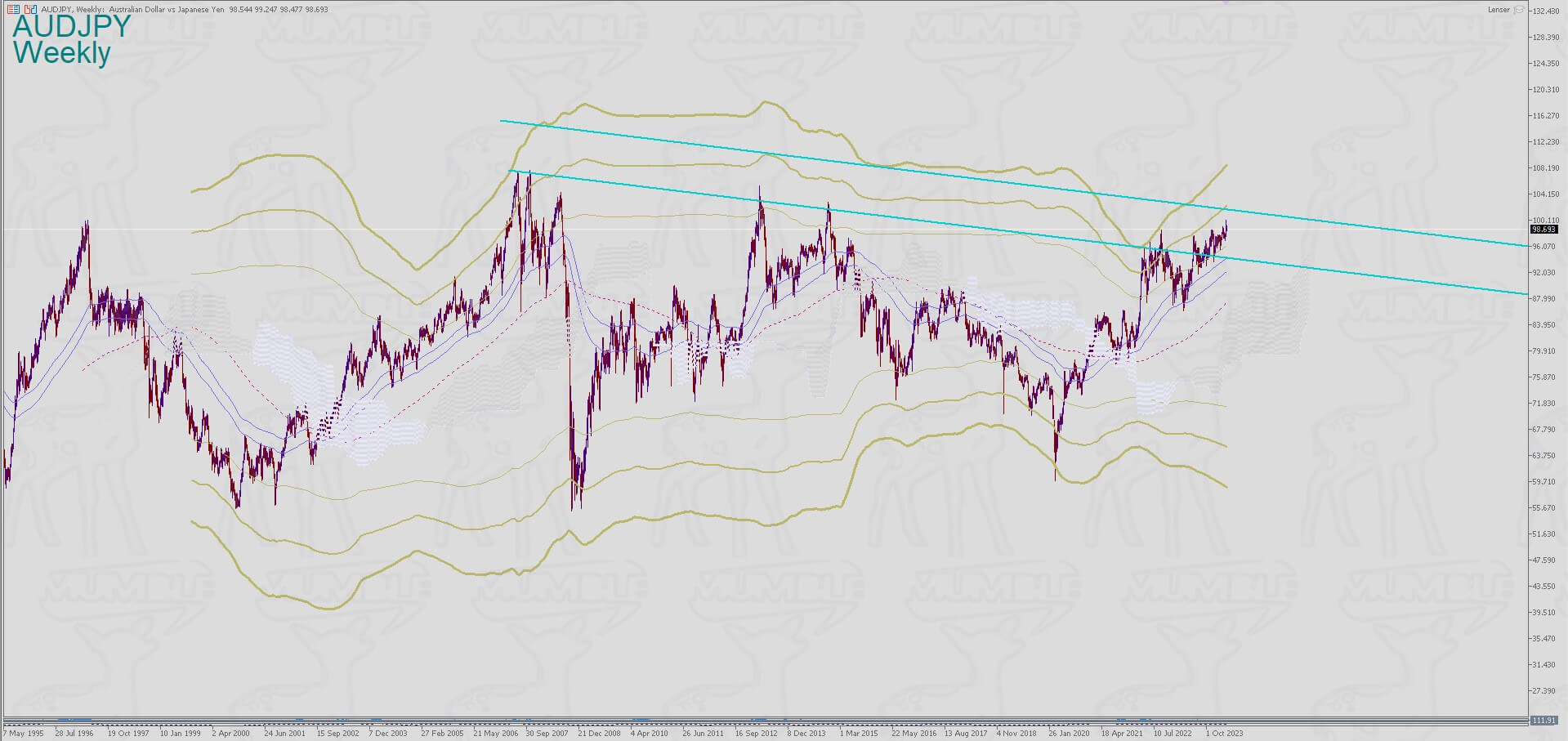
AUDJPY Weekly
AUDJPY Weekly
USDCHF Weekly
USDCHF Weekly
GBPJPY Weekly
GBPJPY Weekly
Re-LIVE: Bank of Japan’s Governor Proposes Ending Negative Interest Rates
Central Bank Policy | IN18L 19.03.2024 JAPAN | www.youtube.com/@CNBC-TV18
Reserve Bank of Australia Media Conference – Monetary Policy Decision – 19 March 2024
Governor Michele Bullock spoke at the Reserve Bank of Australia Media Conference following the March monetary policy decision
FOMC Press Conference, March 20 2024
Mediengespräch der Schweizerischen Nationalbank vom 21. März 2024
YouTube-Player
MPs question Prime Minister Rishi Sunak – Liaison Committee – 26 March 2024
While the BoE refuses to give the public a press conference, the Prime Minister is the man.

Externe Quellen/Links

URL-Link Beschreibung
boj.or.jp – Changes in the Monetary Policy Framework (PDF) March 19, 2024
boj.or.jp – Changes in the Monetary Policy Framework (PDF Poster) March 19, 2024
boj.or.jp – Press Conference Transcript (PDF English) March 19, 2024
rba.gov.au – Statement by the Reserve Bank Board: Monetary Policy Decision, 19 March 2024
rba.gov.au – Media Conference Monetary Policy Decision, 19 March 2024
federalreserve.gov – Federal Reserve issues FOMC statement March 20, 2024
federalreserve.gov – Federal Reserve issues FOMC statement (PDF) March 20, 2024
federalreserve.gov – Summary of Economic Projections (PDF) March 20, 2024
federalreserve.gov – Transcript of Chair Powell’s Press Conference (PDF) March 20 2024
snb.ch – Mediengespräch der Schweizerischen Nationalbank vom 21. März 2024
snb.ch – Geldpolitische Lagebeurteilung (PDF) vom 21. März 2024
snb.ch – Geldpolitische Lagebeurteilung vom 21. März 2024
bankofengland.co.uk – Monetary Policy Summary and minutes of the Monetary Policy Committee meeting ending on 20 March 2024
bankofengland.co.uk – Letter from the Chancellor to the Governor 21 March 2024
bankofengland.co.uk – Letter from the Governor to the Chancellor 21 March 2024
bankofengland.co.uk – Financial Policy Summary and Record – March 2024

Survivors

Survivors – Jean Lorrah

2024-01-06 05:12:48 UTC+1

Guten Morgen

German 2024-01-31, die FED behält ihren Leitzins bei 5.5%.
2024-02-01, die BoE behält ihren Leitzins bei 5.25%.

RBA Media Conference – Monetary Policy Decision 06 Feb 2024 LIVE
2024-02-06, die RBA behält ihren Leitzins bei 4.35%.


Der Wirtschaftsmotor – in den USA – brummt, die Suppe köchelt und die Segel sind gehisst.
‚Higher for Longer‘ bleibt das Schlagwort, bis sich die Inflation nachhaltig im Inflationsziel bei 2% eingependelt hat.

Zu erwähnen bleibt die Argentinische Zentralbank, Banco Central de la República Argentina (BCRA), rund um den neuen Vorsitzenden Santiago Bausili, welche den Leitzinssatz auf 100% gesenkt hat (-26%). Dies entspricht dem REPO-Overnight-Satz, die Deposit-Interest-Rate liegt weiterhin auf 107.73%.
Der neue argentinische Staatspräsident Javier Milei ist zwar vom Fach, Milei war über 20 Jahre lang Professor für Makroökonomie, Wachstumsökonomie, Mikroökonomie und Mathematik für Wirtschaftswissenschaftler, dennoch wird es für den Bankrott-Staat äußerst schwierig.
Argentinien hatte „Ende 2019 unfassbare 323 Milliarden Dollar Schulden“ [www.dw.com]. Eine Kokain-Epedemie – Kokain macht nicht nur wach und manisch sondern auch paranoid und psychotisch – plagt das Land, Drogenbanden haben das Sagen und unterminieren jede staatliche Ordnung.
Um Argentinien wieder auf Kurs zu bringen, braucht es eine Bürgschaft für jeden Argeninier, dazu braucht es einige Austausch-Programme und Stipendien im Ausland. Zudem müssten die Argentinier ihren Staat unentgeltlich, auf freiwilliger Basis unterstützen. Ein Freiwilligendienst, um die Sozialarbeit zu bewältigen, bei kommunalen Infrastruktur-Projekten (Internet!) beizutragen. Bildungs- und Anti-Drogen Kampagnen müssen vom Volk getragen, statt von außen aufoktroyiert werden.
Viele junge Argentinier setzen mit ihrem Drogen und Kommunismus-Wahn auf das falsche Pferd.
Ich denke, Milei ist die richtige Wahl, und sollte das Land wieder in Fahrwasser bringen können. Bis die Jugend Argentiniens sich aber aus dem Sog aus Drogen und Armut (was immer mit einer Gewaltspirale einhergeht!) befreien kann, braucht es einen Milei in jeder Familie. Eine Verpflichtung bereits in der kleinsten Einheit eines Staates, hin zu rationaler Ordnung und letzlich steigender Freiheit.
Medizin den Alten, Schwachen und Bedürftigen, Aufgabe und Verantwortung der Jugend und allen die ihre Seele nicht einer Droge verkauft haben!
Der argentinische Peso bleibt Zahlungsmittel.


Weitere Details und einen Ausblick auf den FX Exchange wie immer für Premium-Mitglieder.

LG Ben

Goody Traders

English 2024-01-31, the FED keeps its key interest rate at 5.5%.
2024-02-01, the BoE keeps its key interest rate at 5.25%.

RBA Media Conference – Monetary Policy Decision 06 Feb 2024 LIVE
2024-02-06, the RBA keeps its base rate at 4.35%.


The economic engine – in the USA – is humming, the soup is simmering and the sails are hoisted.
‚Higher for longer‘ remains the watchword until inflation has settled sustainably within the inflation target of 2%.

Worth mentioning is the Argentine central bank, Banco Central de la República Argentina (BCRA), under the new chairman Santiago Bausili, which has reduced the key interest rate to 100% (-26%). This corresponds to the REPO overnight rate, the deposit interest rate remains at 107.73%.
The new Argentine President Javier Milei is an expert in economy. Milei was a professor of macroeconomics, growth economics, microeconomics and mathematics for economists for over 20 years, making him a formidable choise. But things will still be extremely difficult for the bankrupt state.
Argentina had “a staggering $323 billion in debt at the end of 2019” [www.dw.com]. A cocaine epidemic – cocaine not only makes you awake and manic but also paranoid and psychotic – is plaguing the country, drug gangs are in charge and are undermining every state order.
In order to get Argentina back on track, every Argentinian needs a loan guarantee, this is to be initially realized by exchange programs and scholarships abroad. In addition, Argentines would have to support their state on a voluntary basis. A voluntary service to cope with social work, to contribute to municipal infrastructure projects (Internet!). Education and anti-drug campaigns must be supported by the people rather than imposed from outside.
Many young Argentines are betting on the wrong horse with their drug and communism madness.
I think Milei is the right choice and should be able to get the country back on track. But until Argentina’s youth can free themselves from the maelstrom of drugs and poverty (which always goes hand in hand with a spiral of violence!), every family needs a ‚Milei‘. A commitment even in the smallest unit of a state, towards rational order and ultimately increasing freedom.
Medicine for the old, weak and needy, task and responsibility to the young and everyone who has not sold their soul to a drug!
The Argentine peso remains a means of payment.

More details and my outlook on the FX Exchange as always for Premium Members.

Sincerely Yours, Ben

AUDEUR__H4
AUDEUR H4-Chart
GBPUSD__H4
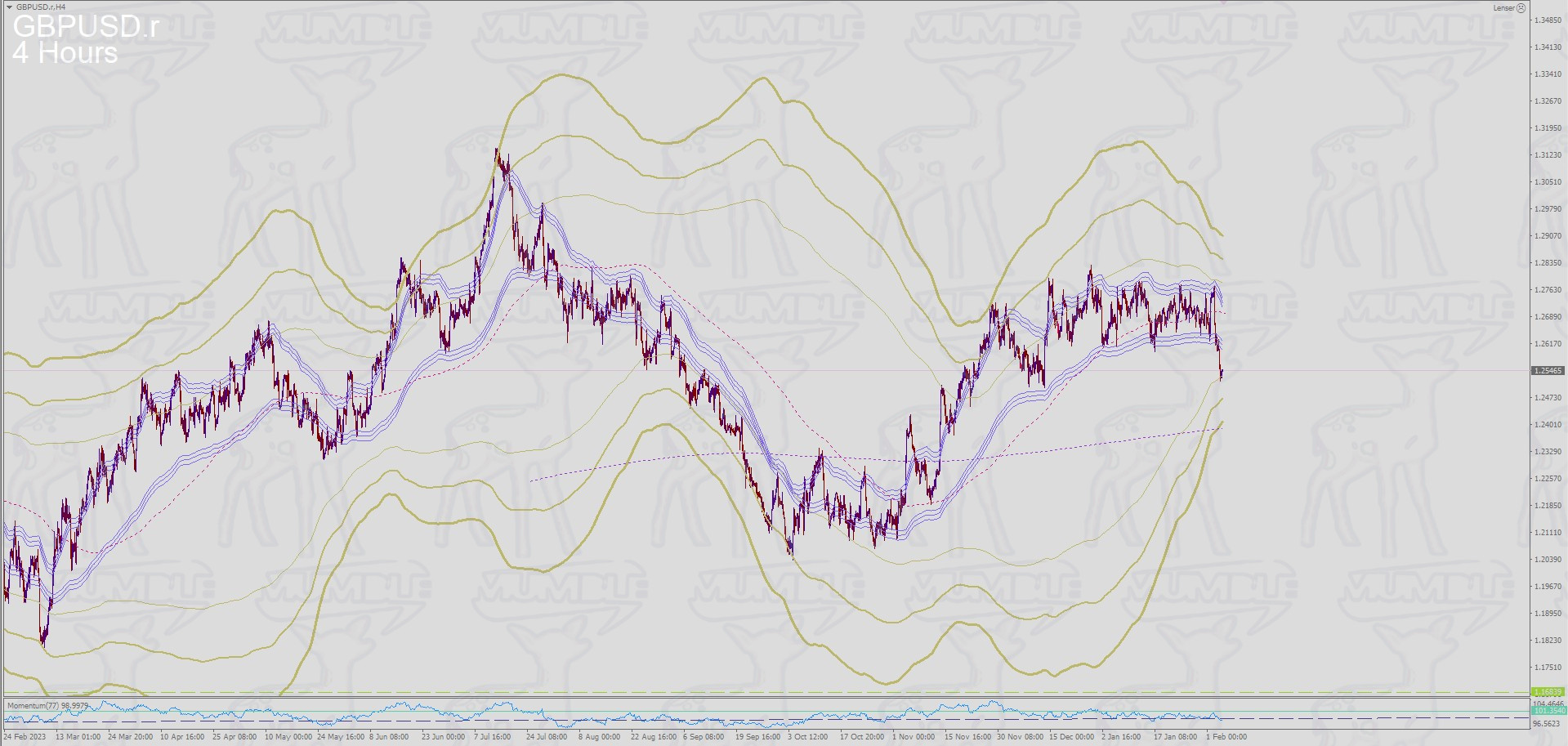
GBPUSD H4-Chart
FOMC Press Conference, January 31, 2024
Monetary Policy Report Press Conference, February 2024
[10 Hours] Through an Eagle’s Eyes in the Alps – Video & Audio [1080HD] SlowTV

Externe Quellen/Links

URL-Link Beschreibung
federalreserve.gov – Transcript of Chair Powell’s Press Conference January 31, 2024
bankofengland.co.uk – Monetary Policy Summary – February 01, 2024
bcra.gob.ar – Central Bank of Argentina
dw.com – Warum Argentinien immer wieder pleitegeht (2021)
bcra.gob.ar – Central Bank of Argentina